Why Your Tree Leaves Are Turning Brown in Summer (and When It’s a Real Problem)
Portland’s deadly heat dome showed just how much mature trees matter. Neighborhoods with mature canopy stayed measurably cooler than blocks with little shade, illustrating in a very real way why the big, established trees on a Lake Oswego property are worth protecting. So when your tree’s leaves start turning brown in summer, it’s natural to wonder whether it’s something to worry about.
The reassuring news is that in Portland’s dry-summer climate, brown usually means thirsty, not sick. There is a simple pattern that helps you tell ordinary heat stress from a real disease or pest problem, and it starts with where the browning shows up and how quickly it spreads. Knowing what to look for can save you an unnecessary worry, or catch a real problem while it’s still easy to fix.
Key Takeaways
- Heat and drought scorch the leaf margins first and tend to affect the whole canopy fairly evenly, while sudden wilting on one side or a single limb points toward a real problem.
- Some common pests and diseases, such as Verticillium wilt, can mimic heat stress from the ground, so the pattern narrows the cause without always confirming it.
- Watering deeply, keeping mulch off the trunk, and holding off on fertilizer all help a thirsty and stressed tree recover.
- When browning spreads across half the canopy or several trees at once, an arborist assessment is the next best step.
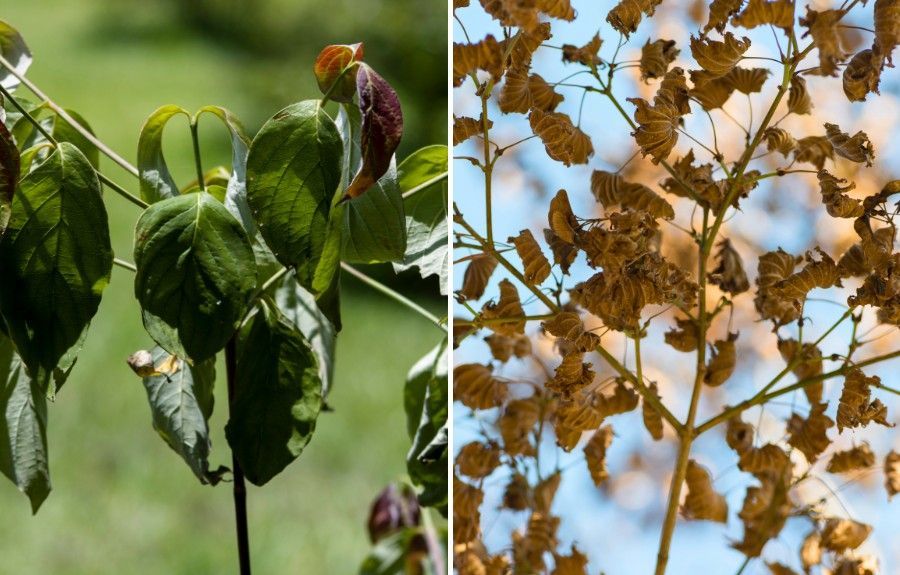
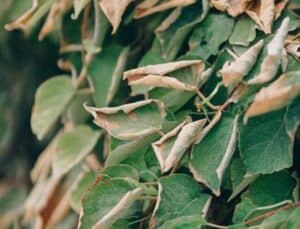
Wilting that bounces back by morning, like the leaves on the left, usually points to ordinary heat stress. Leaves that stay curled, dry, and brown like the ones on the right are worth a closer look.
What Does Summer Heat Stress Look Like on a Portland Tree?
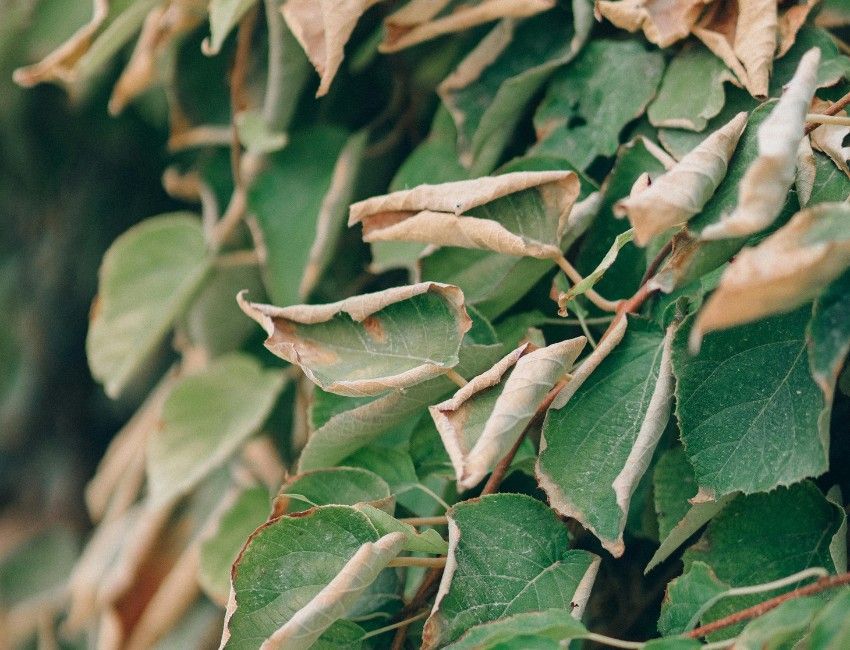
Heat and drought stress usually shows up as browning and crisping along the leaf margins and tips. Arborists call this leaf scorch, and it happens when a tree loses water through its leaves faster than its roots can replace it. Other heat stress signs include:
- Daytime Wilting: Leaves wilt in the heat of the day and perk back up by evening.
- Even Browning: Browning spreads fairly evenly across the whole canopy.
- Interior Leaf Drop: The tree sheds some interior leaves to cut its water losses.
On the hillside lots common to Lake Oswego and West Linn, wind pulls moisture from the leaves faster, so scorch is usually worse on the windward side. This is generally the most common explanation for summer browning, especially in our dry climate.
How Can You Tell Heat Stress from Other Common Tree Health Concerns?
The quickest tell is the pattern of the damage. Heat and drought stress usually look different from a disease or pest problem. That pattern narrows things down, but it isn’t foolproof, since a few serious problems can mimic drought stress closely.
A handful of signs usually point to ordinary heat stress:
- Margins First: Browning starts at the leaf edges and tips.
- Even Distribution: Damage spreads fairly evenly across the whole canopy.
- Overnight Recovery: Afternoon wilting recovers by the next morning.
- Sun and Wind Exposure: Scorch is worse on the sunny, windward side of the tree.
However, a few other signs indicate trouble and warrant a closer assessment from a Certified Arborist:
- One-Sided Wilting: A single limb or side wilts suddenly while the rest of the tree looks fine.
- No Overnight Recovery: Wilting does not bounce back by morning.
- Yellowish, Undersized Leaves: Foliage looks yellowish and stunted rather than crisp and brown.
- Visible Damage at the Base: Oozing sap, sunken cankers, or mushrooms appear at the base of the tree.
The One Disease That Mimics Heat Stress
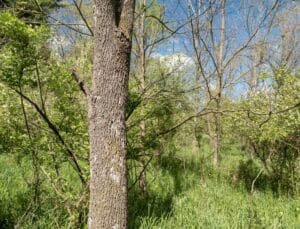
Those patterns catch most cases, but one disease consistently slips through disguised as heat stress: Verticillium wilt, a soil-borne fungus most common on maple and ash.
That soil-borne nature is exactly what sets it apart. Most foliar and fungal diseases need wet leaves to take hold, so Portland’s dry summers keep them in check, but Verticillium lives in the soil and isn’t slowed by dry weather the same way. That makes it the one disease genuinely worth ruling out before assuming a browning tree is just stressed. A few signs set it apart from ordinary scorch:
- Sudden, Localized Wilting: Leaves on one side or a single branch wilt and die suddenly.
- Undersized Foliage: Leaves look yellowish and undersized.
- Sapwood Streaking: Greenish or olive streaking appears in the sapwood under the bark.
- Summer Timing: Symptoms appear in mid-to-late summer heat.
Even with these distinguishing signs, Verticillium wilt is often mistaken for heat stress because both tend to appear during the hottest part of the summer. A Certified Arborist can assess your tree, determine the underlying cause of the symptoms, and recommend the appropriate treatment before the problem worsens.
Which Portland Trees Are Most Prone to Summer Decline?
Large, broad-leaved species scorch first, including:
- Bigleaf maple
- Japanese maple
- Ash
- Birch
- Llinden
- Horse chestnut
- Ornamental fruit trees
DID YOU KNOW?: Conifers don’t scorch the way broad-leaved trees do. For Douglas firs, drought risk shows up as insect pressure instead: drought-weakened trees become targets for the flatheaded fir borer.
What Can You Check Yourself Before Calling an Arborist?
Before deciding whether the symptoms you’re seeing need a professional, there are a few things worth checking on your own.
Start with the soil, not the leaves. A quick check tells you whether the tree needs water or something else entirely, so work through a short sequence:
- Check Soil Moisture: Push a screwdriver or your finger a few inches into the ground. Soggy soil points to too much water or poor drainage, not thirst, and more water will only make it worse.
- Note the Symptom Pattern: Compare margins-first, uniform browning against one-sided, sudden wilting.
- Run the Overnight-Recovery Test: Check whether wilted leaves bounce back by morning.
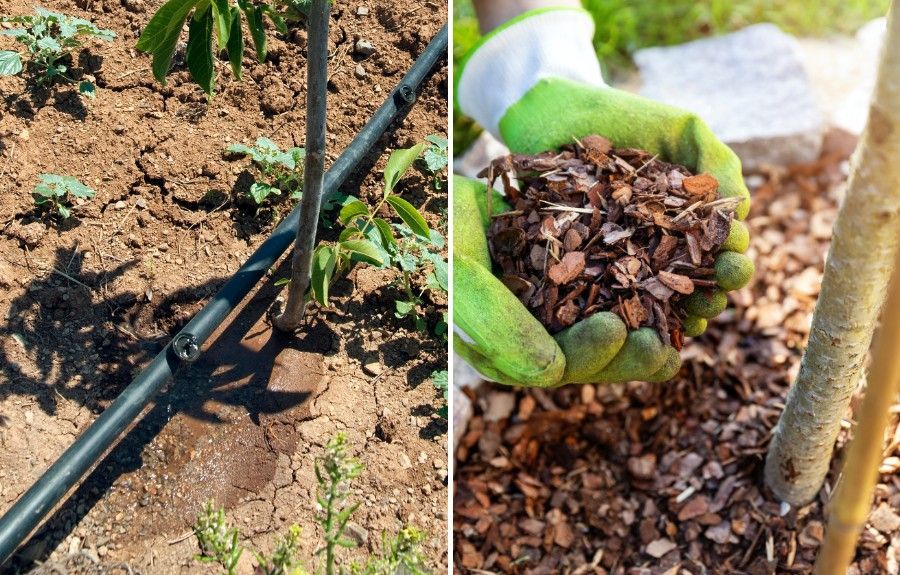
Deep, infrequent watering through a drip line and two to four inches of mulch pulled back from the trunk both help a heat-stressed tree recover.
Here’s how to help a heat-stressed tree recover:
- Deep, Slow Watering: Water infrequently and deeply so moisture reaches the deeper roots.
- Correct Mulching: Keep 2-4 inches of mulch over the root zone, pulled back off the trunk.
- Skip the Fertilizer: Fertilizer forces growth the tree cannot support and raises its water demand.
Keep in mind that these practices only really help if the tree is truly dehydrated. If the leaves are yellowing rather than browning, that’s usually waterlogged roots blocking iron uptake in our naturally acidic Oregon soils.
Frequently Asked Questions About Why Tree Leaves Turn Brown in the Summer
Will brown, scorched leaves grow back, or are those branches dead?
Scorched leaves will not turn green again, but the branch is usually still alive if the buds and twigs are supple and green under the bark. The real test comes the following spring, when a recovering tree pushes fresh leaves and a dead branch stays bare.
Are my lawn sprinklers enough to keep a mature tree hydrated in summer?
Usually not, because lawn sprinklers wet only the top inch or two, while a mature tree’s roots draw from deeper and well beyond the trunk. A long, slow soak out toward the drip line every week or two does far more good than daily lawn watering.
Does shading or wrapping a young tree actually help during a heat wave?
Temporary shade cloth can reduce scorch on a newly planted or thin-barked young tree during an extreme stretch, since young trees have shallow roots and little reserve. Light-colored trunk wrap can guard against sunscald too, though mature trees rarely need either.
Can summer heat stress make a tree more likely to drop a limb?
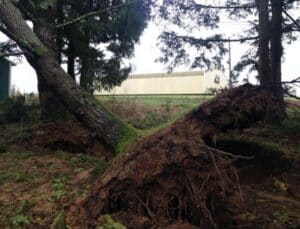
Yes, prolonged drought can trigger sudden limb drop in some species, where a seemingly healthy branch fails on a hot, still day. It is one reason a large stressed tree overhanging a house or driveway is worth a professional look rather than waiting to see what happens.
Is it too late to save a tree that has already lost most of its leaves?
Not necessarily, because a tree can drop its leaves as a survival response and still recover if its roots and cambium are intact. A Certified Arborist can check for living tissue and root health before you decide whether to preserve or remove it.
How does one rough summer affect a tree the next year?
A single hard drought year can leave a tree with reduced reserves, thinner growth, and weaker defenses well into the next season. That lingering weakness opens the door to borers and other secondary pests, so a stressed tree is worth monitoring even after the heat passes.

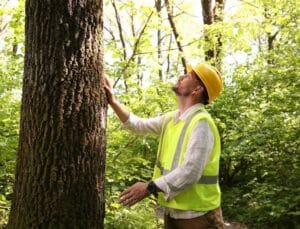
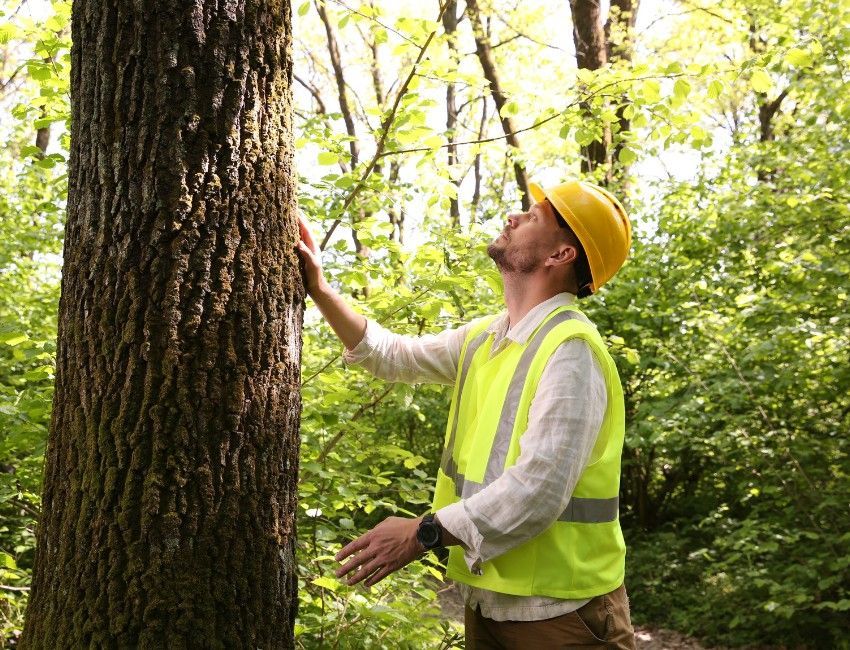
During an arborist assessment, our Certified Arborists document canopy condition and symptom patterns to confirm whether a tree is heat stressed or dealing with something more serious.
Get Answers About Your Tree’s Brown Leaves
Heat stress is common during Portland summers, but it isn’t the only reason trees develop brown leaves. ArborPro’s ISA Certified Arborists assess the entire tree—not just the symptoms—to determine what’s causing the decline and recommend the right solution. If you’re concerned about a mature tree on your property, we’re here to help.
Call 503-648-8733 or request a quote online to schedule an arborist assessment today.