Does Your Tree Need an Arborist Assessment? Here’s When It’s Worth It
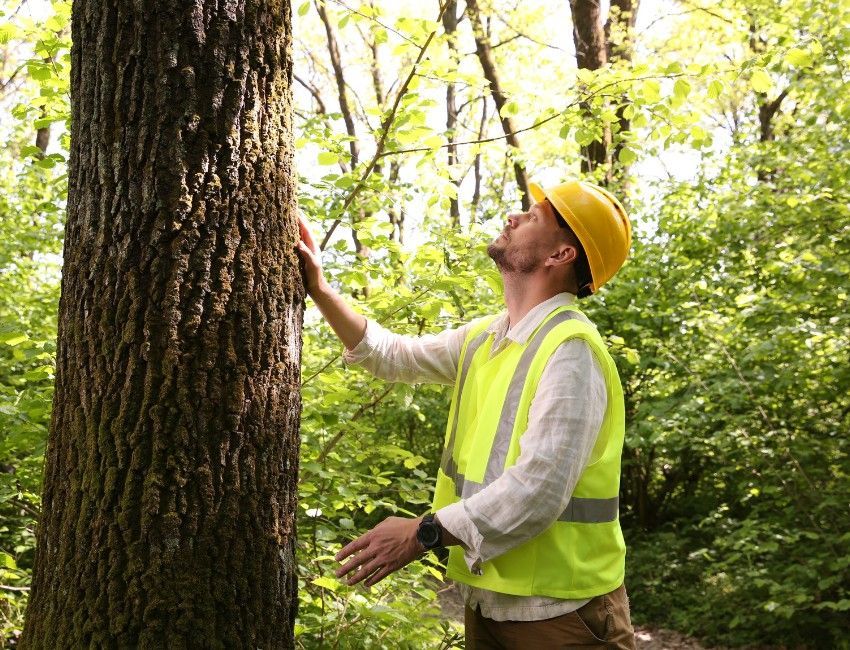
When you notice a new lean, thinning canopy, mushrooms at the base, or another change in a mature tree, you may need more than a free estimate for tree work. An estimate tells you what a service will cost. An arborist assessment helps determine what’s actually happening with the tree and what, if anything, should be done about it.
The challenge is knowing when that extra level of evaluation is worth it. Some concerns are relatively straightforward, while others involve structural defects, root problems, or signs of decline that aren’t easy to judge from the ground. Knowing which situations call for an arborist assessment can help you get the right kind of expertise before making a decision about your tree.
Key Takeaways
- An arborist assessment is most useful when you’ve noticed a change in a tree but need help determining the cause, severity, or right next step.
- New or worsening leans, cracks, unexplained canopy decline, fungal growth, root-zone changes, and large dead or hanging branches are common reasons to have a tree assessed.
- Assessments can also be valuable before construction, after a major storm, when considering removal of a mature tree, or when professional documentation is needed.
- A Certified Arborist looks at the tree’s health, structure, root zone, site conditions, and potential targets to put visible symptoms into context.
- Depending on the findings, a consulting arborist may recommend monitoring, treatment, pruning, structural support, preservation, or removal rather than starting with a predetermined service.
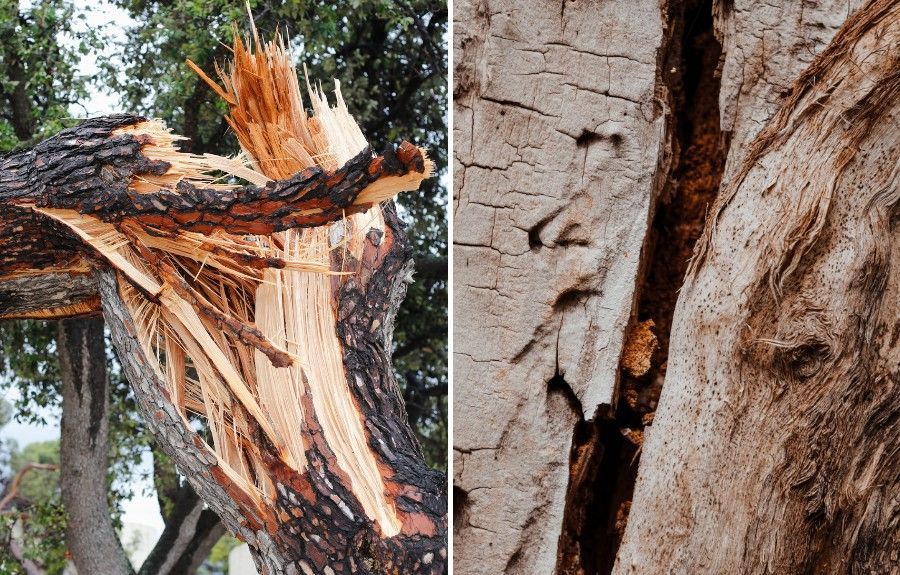
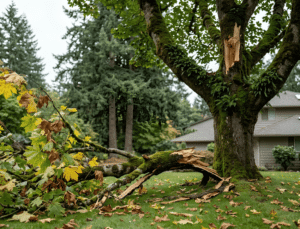
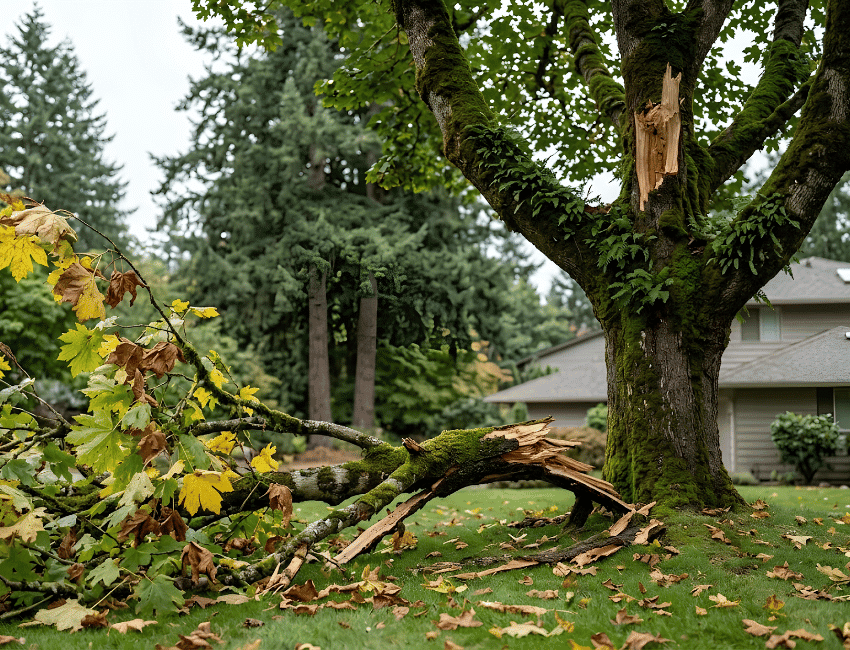
Broken limbs and trunk cracks are visible warning signs that a tree may have structural defects requiring a professional inspection.
When Should You Get an Arborist Assessment?
An arborist assessment is worth scheduling when you need to understand what is happening with a tree before deciding what to do about it. If you already know you need a specific service, such as removing a fallen tree or pruning a broken branch, an estimate may be enough. When the condition of the tree or the right next step is unclear, an assessment gives you more information to make that decision.
Common reasons to schedule an assessment include:
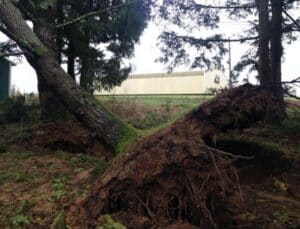
- A New or Worsening Lean: Especially when the change is recent or accompanied by lifting soil or other movement around the roots.
- Cracks or Splits: An arborist can evaluate where the defect is located, how much sound wood remains, and how it affects the tree’s structure.
- Mushrooms or Conks: Fungal growth on the trunk or near the base can be associated with internal decay, but what you see outside the tree doesn’t tell you how extensive it is.
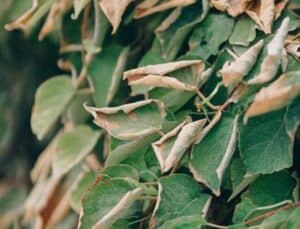
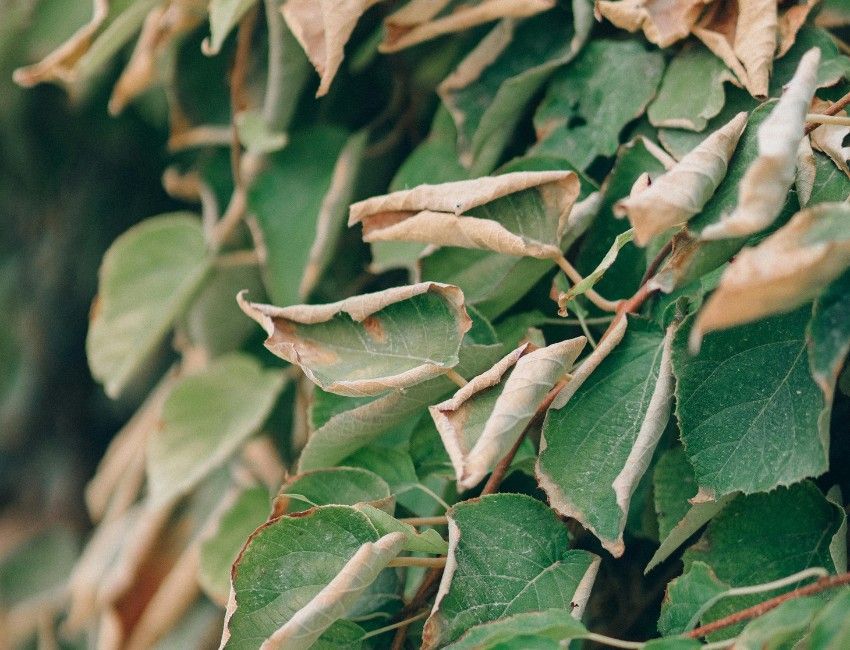
- Unexplained Canopy Thinning or Dieback: Changes in the canopy can have many causes, from root problems and environmental stress to insects and disease.
- Changes Around the Root Zone: Construction, trenching, grade changes, soil compaction, and damaged roots can affect a tree even when the canopy still looks healthy.
- Large Dead or Hanging Branches: Their location, attachment, and what they could strike all factor into how urgently they should be addressed.
- A Tree That Suddenly Looks Different: When a mature tree you’ve watched for years changes without an obvious explanation, an assessment can help determine why.
When Should You Have a Tree Assessed Even If It Looks Healthy?
Not every assessment starts with a sick or damaged-looking tree. Sometimes the value is identifying concerns before a change to the property, a major decision, or severe weather puts more pressure on the tree.
Consider an assessment:
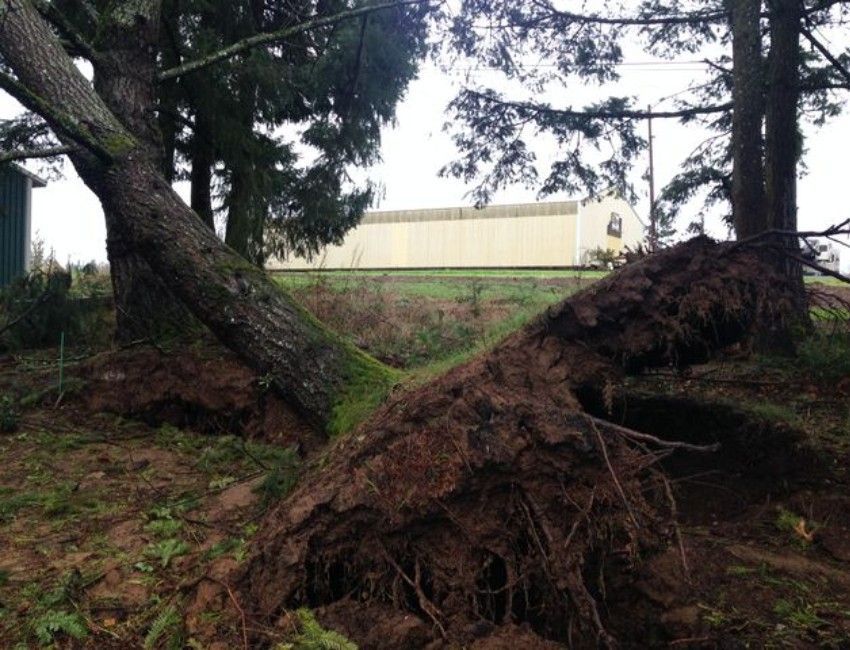
- After a Significant Storm: A tree may remain standing and fully leafed out even when wind or heavy snow has damaged branches, attachments, or roots.
- Before Construction or Excavation: Driveways, additions, utilities, grading, and other projects can affect roots well beyond the trunk. An arborist can help identify the root zone that needs protection before work begins.
- Before Buying a Property with Mature Trees: Large trees can be valuable assets, but they can also come with maintenance needs or concerns that aren’t obvious during a typical home inspection.
- Before Removing a Tree You’d Rather Preserve: An assessment can help determine whether preservation is reasonable before you make an irreversible decision.
- When a Large Tree Could Affect Something Important: Trees near homes, roads, driveways, play areas, or neighboring properties may warrant a closer look even without an obvious defect.
- When You Need Professional Documentation: Certain permits, HOA matters, insurance situations, or disputes involving trees may call for an arborist’s findings rather than a homeowner’s observations.
In these situations, the assessment isn’t about finding a reason to perform tree work. It’s about having better information before the stakes get higher.
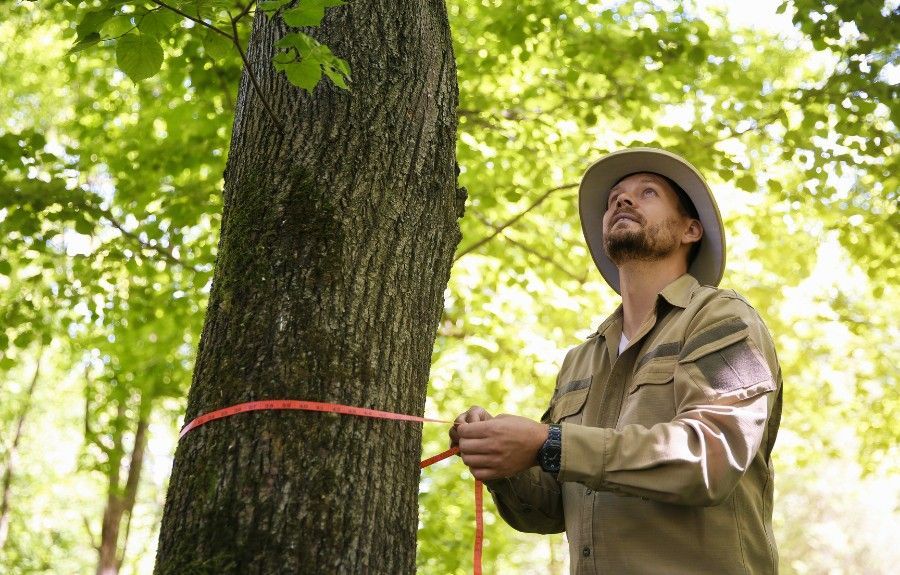
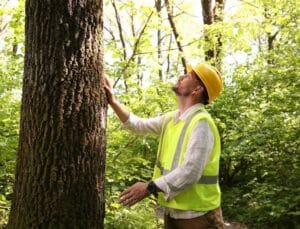
Measuring a tree’s trunk is one step in a professional assessment that helps determine its health, condition, and management needs.
What Can an Arborist Assessment Tell You?
Seeing a crack, thinning canopy, or mushroom tells you where to look, but it doesn’t necessarily tell you what caused the problem or how significant it is. An arborist assessment looks beyond the obvious symptom to consider the tree’s health, structure, roots, growing conditions, and surroundings together.
That broader view can reveal whether a visible problem is isolated or part of something more significant. A crack may raise questions about structural stability, for example, while canopy decline could trace back to root damage, soil conditions, pests, disease, or several stressors working together. If decay or another defect can’t be fully evaluated visually, the arborist can also determine whether further investigation is warranted.
Most importantly, the assessment puts those findings into context so you can make a decision about the tree. That may mean monitoring it, addressing a health or site problem, pruning or adding structural support, or determining whether preservation is still reasonable. The goal is to understand the problem before deciding on the solution.
DID YOU KNOW : A tree health assessment and a tree risk assessment answer different questions. A tree health assessment focuses on vitality, decline, pests, disease, and site conditions. A tree risk assessment focuses on the likelihood of failure, the consequences if failure occurs, and the resulting level of risk. The two often overlap when a declining tree is located near your home.
What Does an Arborist Evaluate?
The assessment isn’t limited to the symptom that prompted the call. An arborist may evaluate several parts of the tree and its surroundings to understand how they relate to one another:
- Canopy: Crown density, dieback, deadwood, branch structure, and patterns that may indicate stress or decline.
- Trunk and Bark: Cracks, cavities, wounds, decay indicators, and weak branch unions.
- Root Zone: Root flare condition, visible root defects, soil movement, compaction, drainage, and changes in grade.
- Site Conditions: Recent construction, irrigation, exposure, surrounding trees, and other factors that may affect the tree.
- Potential Targets: Homes, vehicles, walkways, roads, neighboring property, and other things that could be affected if a tree or branch fails.
At ArborPro, four of our 10 ISA Certified Arborists perform consultations, and six team members also hold the ISA Tree Risk Assessment Qualification (TRAQ).
When Are Advanced Diagnostic Tools Needed?
Most assessments begin with a visual evaluation, but some concerns require a closer look. If an arborist finds signs that raise questions about internal decay or another defect that can’t be adequately evaluated from the outside, additional tools may be recommended.
Depending on the situation, those tools can include:
- Binoculars to examine deadwood, branch attachments, or other concerns high in the canopy.
- Mallet sounding to help identify areas that warrant further investigation for cavities or decay.
- Sonic tomography to gather more information about internal conditions without drilling into the tree.
- A resistograph to measure resistance inside the wood through a very small probe hole.
What Do You Get After an Arborist Assessment?
The biggest value of an assessment is a clearer understanding of what you’re dealing with and what deserves attention first. Rather than making a decision based only on the symptom you can see, you have an arborist’s findings to guide what happens next.
Depending on the reason for the assessment, that may include:
- An explanation of the tree’s condition and the concerns identified.
- Recommendations for monitoring, treatment, maintenance, or other action.
- Guidance about how urgent a problem is.
- Documentation when a report is needed for a permit or other purpose.
That documentation can be particularly useful when a tree is part of a larger decision. Some Oregon City and Clackamas County-area tree permit applications may require arborist documentation depending on the property, tree, and applicable regulations. Professional findings may also be useful in certain HOA, insurance, or neighboring-property situations.
What Happens After an Arborist Assessment?
An assessment doesn’t automatically lead to tree removal or even tree work. A consulting arborist uses the findings to recommend the next step based on the tree’s condition, the property, and your goals for the tree.
That could mean continuing to monitor the tree, addressing a health or site problem, pruning or adding structural support, or developing a tree preservation plan. In cases where the tree’s condition or level of risk makes preservation impractical, tree removal may be recommended.
The value of working with a consulting arborist is that the assessment starts with the tree, not a predetermined service. The goal is to understand what’s happening and give you the information you need to make the right decision for the tree and your property.
Frequently Asked Questions About Arborist Assessments
How much does an arborist assessment cost in Oregon City or the Portland area?
The cost depends on your property size and the scope of the evaluation, so we provide a quote after an initial conversation about your trees and your concerns. That way you know what to expect before anything is scheduled. You can start the conversation on our arborist services page.
Can an arborist tell if a tree is dying?
A qualified arborist can evaluate whether a tree is declining, identify likely causes, estimate its prospects for recovery, and assess whether structural defects create an unacceptable level of risk. Many trees that look like they’re dying are actually treatable with the right intervention, which is one reason an assessment is worth having before you assume the worst.
When should I ask for a risk assessment instead of a health assessment?
If your primary concern is whether a tree could fail and strike your roof, a fence, a car, or a neighboring property, ask specifically for a tree risk assessment performed by an ISA TRAQ-qualified arborist. If you’re more focused on why a tree looks like it’s declining and whether it can be saved, a health assessment by an ISA Certified Arborist is the right starting point.
Do I need an arborist report to get a tree removal permit in Oregon City?
Not always. Oregon City’s requirements depend on where the tree is located and why it is being removed. Street trees and certain dead, diseased, or hazardous trees may require additional documentation, including a Certified Arborist report. Other private-property trees may fall under different rules.
Oregon City’s tree removal permit guide outlines when a permit is required and what documentation the city expects. We handle permit applications and can advise you on exactly what your situation requires.
How do I verify that an arborist is ISA certified?
The International Society of Arboriculture keeps a public credential lookup at treesaregood.org, where you can confirm any arborist’s certification. Our Certified Arborists are listed there, and our Oregon CCB License #128102 is publicly verifiable as well.
How often should my trees be inspected by a professional?
There isn’t one interval that fits every tree. Mature trees with known defects, valuable targets, construction impacts, or a history of failure may warrant more frequent assessment. Otherwise, have the tree reassessed when its condition changes, after significant storms or construction, or when a previous arborist recommends a specific monitoring interval.
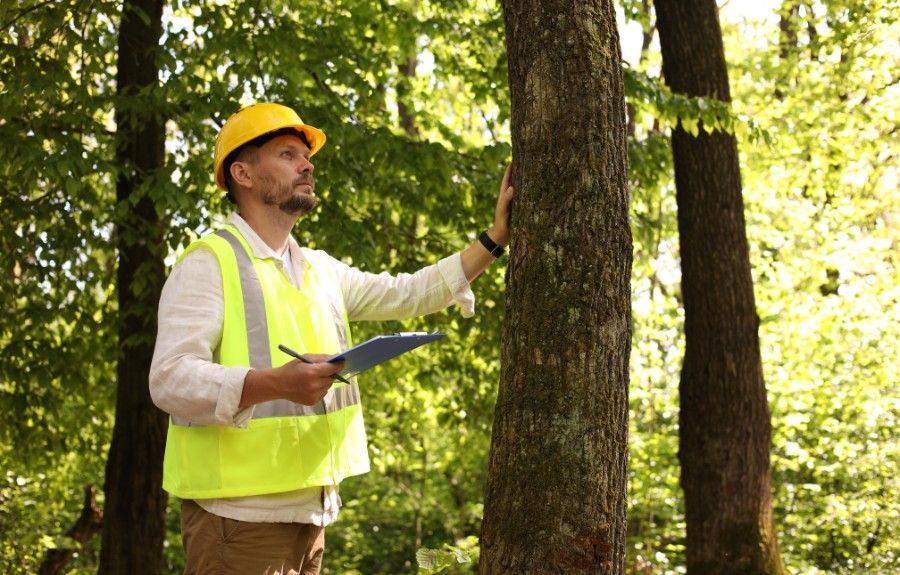
A certified arborist inspects a tree’s condition and documents visible signs of stress, disease, and structural defects during an on-site assessment in Clackamas County.
Get Clear Answers Before Deciding What to Do with Your Tree
Not every thinning canopy, new lean, or patch of damaged bark needs a professional inspection. Many changes are safe to monitor. An inspection becomes worthwhile when you’re trying to determine whether what you see points to hidden decay, root problems, or structural defects that aren’t visible from the ground.
ArborPro’s Certified Arborists help homeowners throughout Oregon City, Gladstone, West Linn, and the surrounding Clackamas County communities diagnose tree problems and recommend the right next step. Call us at 503-473-8733 or request a Certified Arborist assessmentto get clear answers on what you’re actually looking at.