Why Did a Branch Fall Off My Maple Tree?
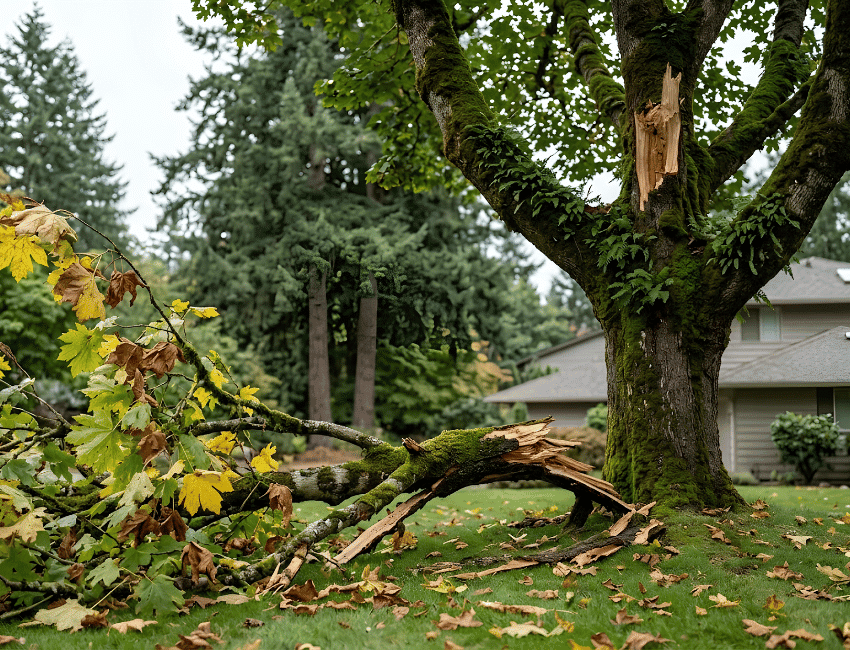
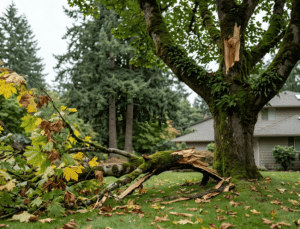
Across Beaverton and the west side, when a bigleaf maple drops a limb without the help of a storm, it’s natural to wonder about the entire tree. If that’s happened to you, you’re probably asking, “Why did a branch fall off my maple tree?” The answer usually comes down to the tree’s structure, not the weather.
A fallen limb can be an isolated event, or it can point to the same structural weakness elsewhere in the canopy. A few specific signs help differentiate the two, and the fix (once you know what you’re dealing with) is typically dormant-season pruning.
Key Takeaways
- A branch falling with no storm usually points to a structural weak point at the branch union, not bad luck.
- Bigleaf maple, one of Portland’s most common trees, is especially prone to codominant stems and long, heavy horizontal limbs that add stress to those unions over time.
- A tight, V-shaped union with bark folded into the seam is a warning sign, and details like wound location, canopy balance, and a history of limb loss help tell an isolated event from an ongoing issue.
- Once your maple is dormant, its full branch structure becomes visible, which makes it the best time for a thorough structural assessment.
- Regular structural pruning reduces end-weight and removes weak unions before they fail on their own.
Is It Sudden Limb Drop?
Sudden limb drop (also referred to as “summer branch drop”) is when a limb breaks off a tree with no storm and no visible decay. Despite being less common than a structural issue, it’s worth ruling out first because of the specific pattern it follows:
- Occurs on calm days, most often hot summer afternoons
- Involves limbs four inches or more in diameter
- Breaks happen three to twelve feet from a fork, with no visible decay at the break point
If that doesn’t fit your situation, it probably isn’t sudden limb drop. For bigleaf maples, most unexplained branch failure comes down to something more identifiable: a structural weak point where the branch meets the trunk. That’s something that can be found and addressed during a structural assessment.
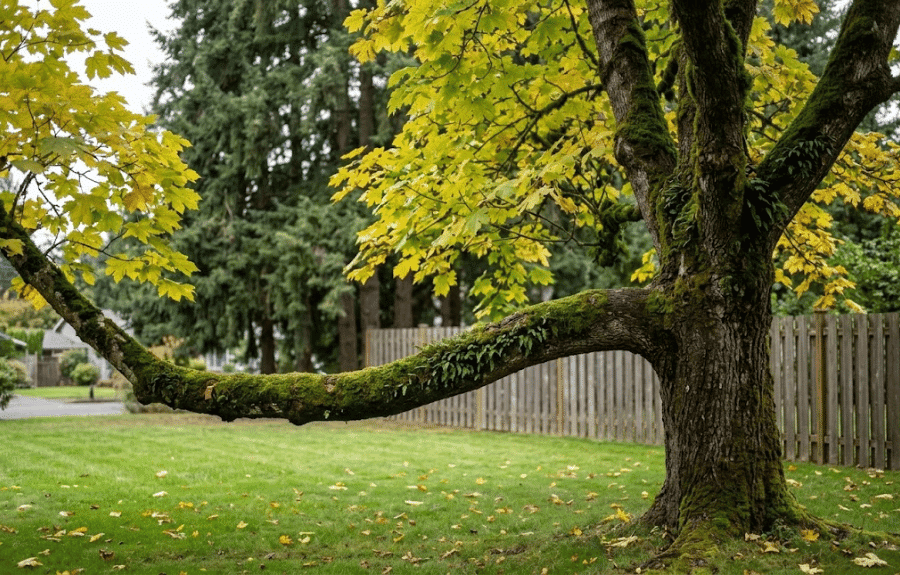
A long limb reaching out sideways acts like a lever on the union where it attaches to the trunk.
Why Are Bigleaf Maples So Prone to This?
Two structural habits make bigleaf maple particularly prone to this kind of failure:
- Codominant Stems: Two or more stems emerge from nearly the same point and grow to similar size. They can trap bark between them (called “included bark”), so the wood fibers don’t interlock the way they do in a normal branch attachment.
- Heavy Horizontal Limbs: A long and heavy limb reaching out sideways can function like a lever on the union where it’s attached. The bigger it gets compared to the trunk, the more stress builds at that union, even when the tree looks healthy.
For an older tree that adds significant value to a landscape, a high-value mature tree assessment can spot these issues before they become a hazard.
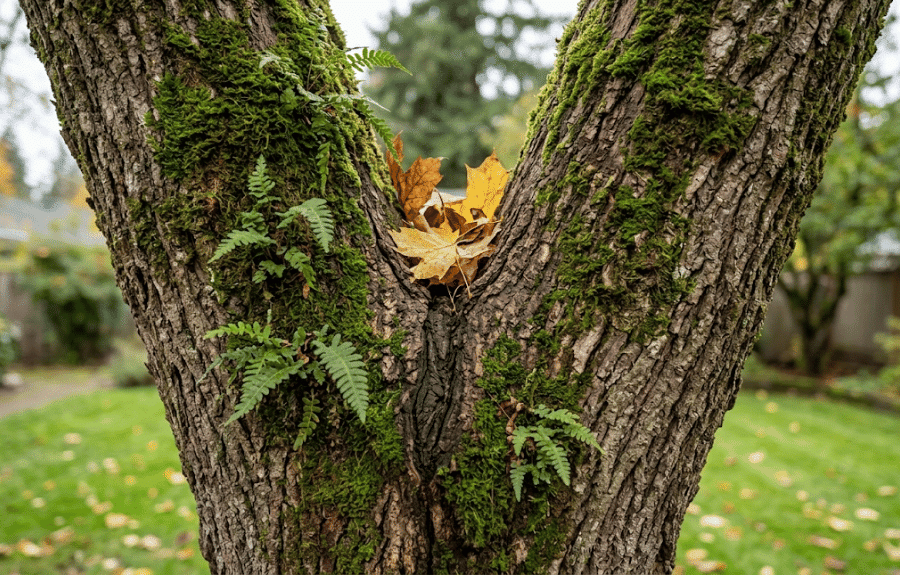
A V-shaped union with trapped bark is a warning sign, since the wood fibers cannot interlock.
How Can You Tell a Strong Union From a Weak One?
Look at where major limbs meet the trunk or each other:
- U-Shaped, Rounded Unions: These are generally strong, thanks to interlocking wood fibers.
- Tight, V-Shaped Unions With Bark Folded Into the Seam: These are a warning sign worth pointing out when you schedule an assessment, since trapped bark keeps the wood from interlocking.
What Signs Point to a Bigger Structural Issue?
A single fallen limb doesn’t immediately indicate a failing maple, but a few details help tell an isolated event from a tree that needs a closer look:
- Wound Location: A break near the trunk is more concerning than one that happened farther out on the limb, since it points to a weaker spot closer to the tree’s main structure.
- Canopy Balance: A visible lean or a canopy that’s noticeably heavier on one side can mean the tree has been compensating for a structural issue for a while.
- Bark Condition: Cracking, seams, or included bark elsewhere on the tree, not just at the failed spot, suggests the same weak-union pattern exists in more than one place.
- History: A tree that has dropped limbs before is telling you something different than a tree where this is the first time.
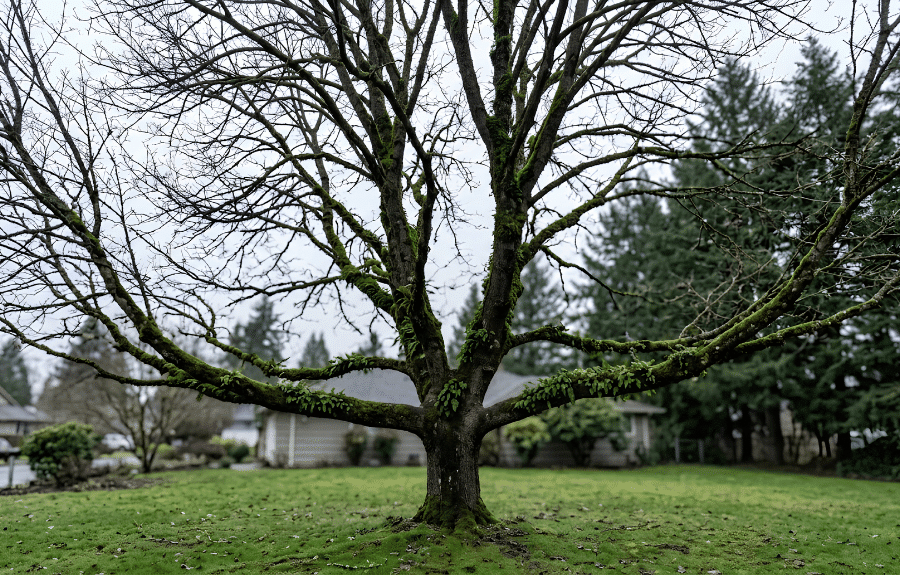
Once the leaves are gone, the full branch structure is easy to read, which makes winter the best time for structural pruning.
Why Is Dormant-Season Pruning the Right Next Step?
You can’t see a bigleaf maple’s structure until the leaves are gone, which is when dormant-season pruning is best done. Generally, we recommend scheduling it in mid- to late winter, since the tree’s easier to read when new growth hasn’t started, and the cuts heal faster, too.
What Does Structural Pruning Do?
Structural pruning does three things:
- Reduces end-weight on long horizontal limbs
- Removes or reduces codominant leaders where it’s safe to do so
- Clears deadwood that adds unnecessary stress to the rest of the canopy
We recommend a follow-up pruning cycle for mature trees, timed based on growth rate and how much correction is still needed. If a full codominant stem can’t be safely removed without leaving a big gap in the canopy, cabling or bracing can support the union. When our arborists identify a weak union during a tree assessment, they’ll recommend cabling and bracing as an add-on to whatever other work they deem necessary.
What If Pruning Can’t Wait Until Winter?
Then it’s worth addressing now, especially if the limb concerning you is:
- Overhanging a structure
- Big enough to cause damage or injury if it fails
- Showing a tight V-shaped union, included bark, or cracking
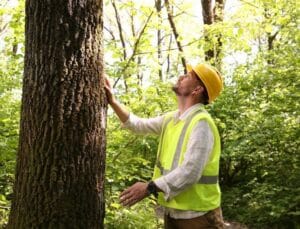
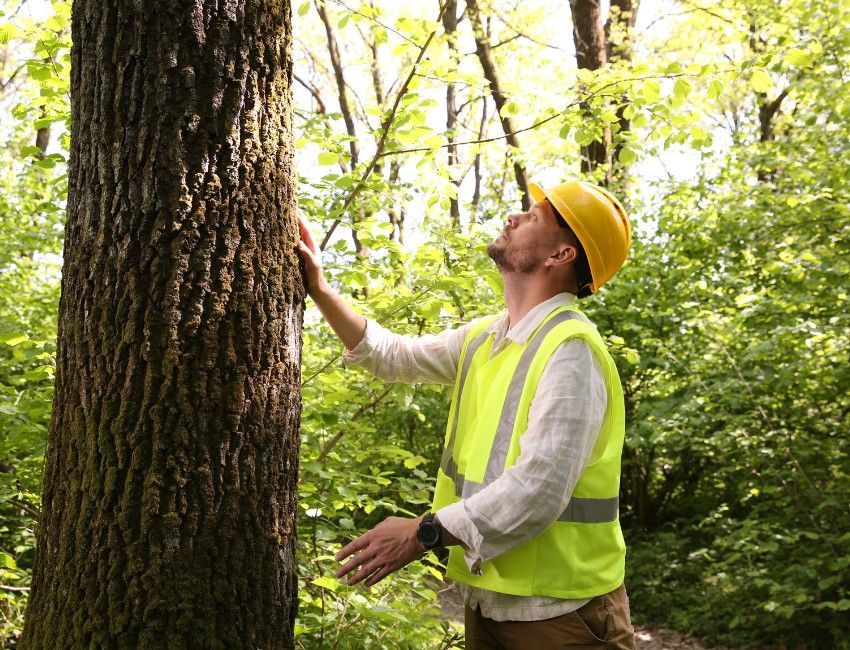
Our ISA Tree Risk Assessment Qualified (TRAQ) arborists can inspect the tree on-site and tell if it needs immediate hazard pruning or can wait until winter. Either way, you’ll know before it becomes a bigger issue. After that, scheduling dormant pruning for your maple is easy enough.
Frequently Asked Questions About Fallen Maple Limbs
Is it normal for a maple tree to occasionally lose a branch?
Some limb loss is part of a mature tree’s normal life cycle, especially as it ages or after storms. If it happens with no storm and no obvious cause, though, it’s worth having the tree’s structure checked rather than assuming it’s routine.
Will sudden limb drop happen again?
There’s no way to predict or prevent a repeat. Unlike a structural weak point (which an arborist can find and correct), sudden limb drop doesn’t typically point to a specific defect that puts other limbs at risk.
Can a tree recover after losing a large branch?
Most healthy trees recover well from a single limb loss once the wound is properly cleaned up. The bigger concern is whether that wound invites decay over time or signals a structural issue elsewhere in the canopy.
What’s the difference between fall hazard pruning and dormant structural pruning?
Fall hazard pruning addresses immediate risks, like overhanging or cracked limbs, ahead of storm season. Dormant structural pruning happens once the tree is bare and corrects codominant stems and weak unions before they become a hazard.
How much does structural pruning cost?
Cost depends on the tree’s size, condition, and access, so it’s not something we can answer accurately without seeing the tree in person. Request a quote, and we’ll walk you through what your maple actually needs.
How do I know it’s time for another pruning?
Watch for new codominant leaders forming, regrowth crowding the canopy again, or another limb coming down. Any of those are signs it’s worth having an arborist take another look, rather than waiting for a set number of years to pass.
ArborPro Can Assess Your Maple Trees
A maple that drops a limb without a storm should get a closer look. Once the canopy’s bare, our ISA Certified Arborists can identify weak unions before they fail and build a pruning plan tailored to your tree, so request a quote online today to get started.