What Is Tree Cabling and Bracing?
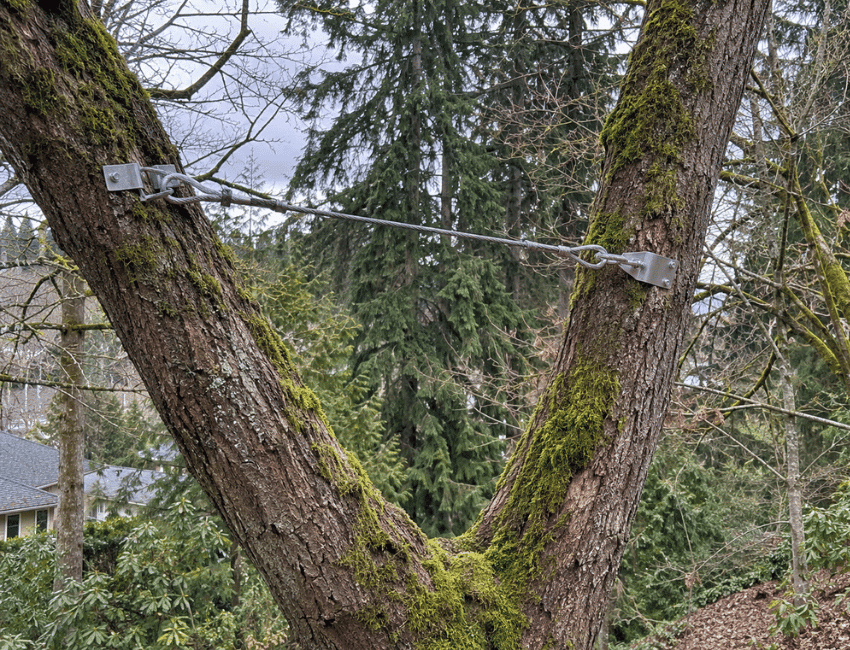
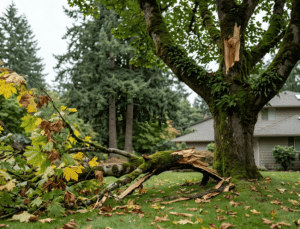
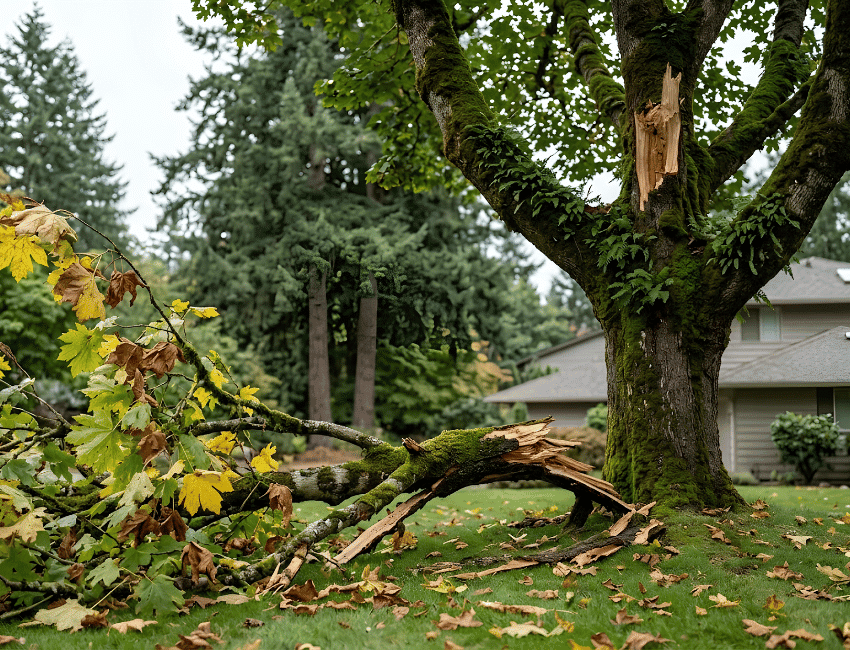
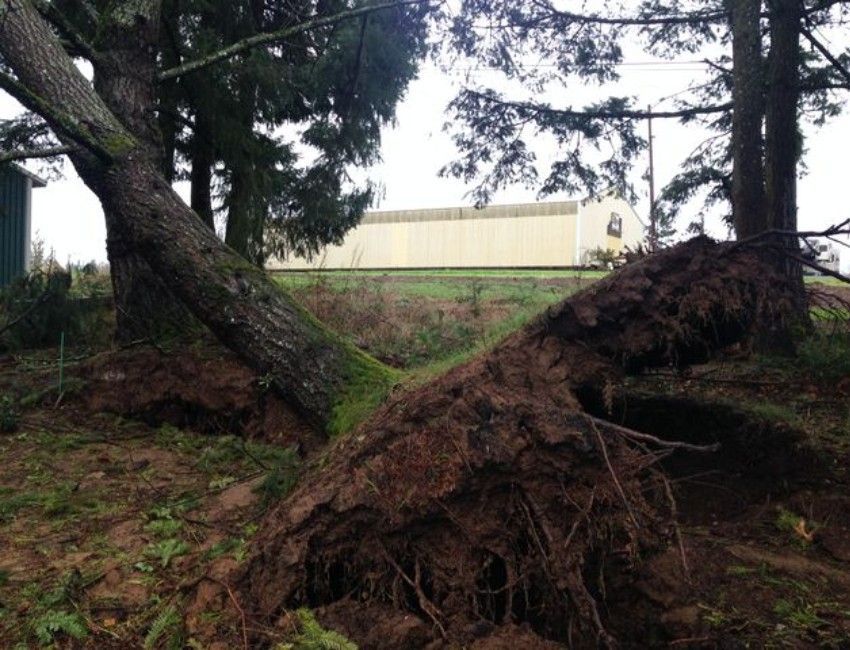
Southwest Portland’s hillside yards have mature big-leaf maples and Douglas-firs whose canopies take on wind, ice, and saturated soils every winter. When one of them has a weak point, like two co-dominant stems sharing a poor union, an arborist may recommend cabling. If you’ve gotten such a recommendation, your first question is probably, “What is tree cabling and bracing?” It’s a structural support system of cables and rods that limits how that part of the tree moves.
Going through with that recommendation commits you to a professional installation, periodic rechecks, and a review as the tree grows.
Key Takeaways
- Cabling and bracing limit how a weak part of the tree moves, which reduces risk but does not guarantee the tree will not fail.
- Static systems use steel cable anchored into the wood, while dynamic systems use rope-like material that is usually wrapped without drilling.
- An ISA Certified Arborist identifies cabling during an assessment, and the tree owner is responsible for scheduling periodic rechecks under the ANSI A300 standard.
- Hardware is built to last, but how long the system stays useful depends on how the tree grows.
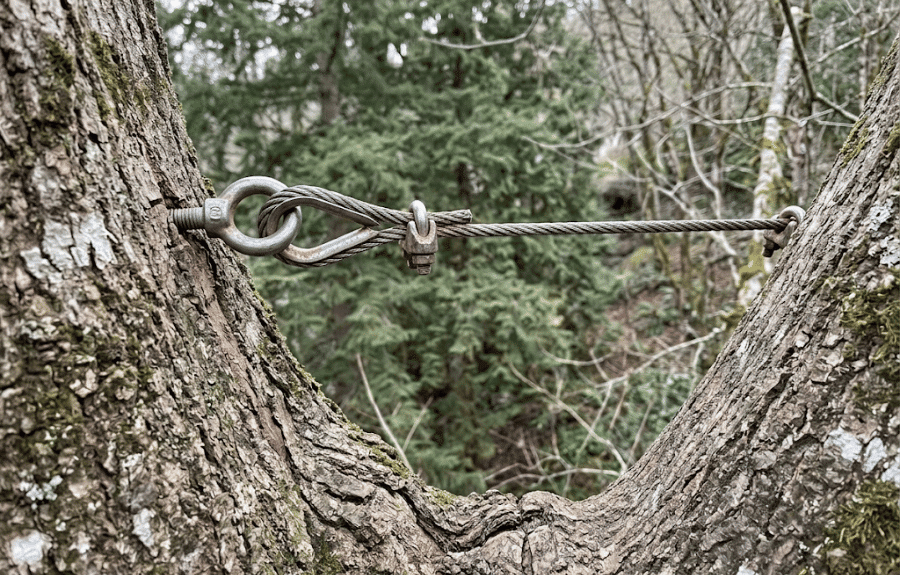
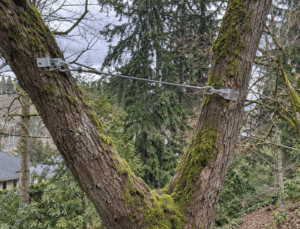
Static systems use steel cable anchored into the wood to hold a weak union rigid, while dynamic systems use a rope-like material wrapped around the limbs instead.
What Is the Difference Between Static and Dynamic Cabling?
Static systems use a rigid steel cable with a fixed weak point, while dynamic systems allow more movement with rope-like synthetic material. Your arborist chooses between them based on what they see on your tree, and the choice affects how the system attaches and how easy it is to inspect later. Cabling is often paired with bracing, which uses rigid rods installed through the stems to limit movement between leaders at risk of failure. Here’s how the two cabling systems compare:
- Static Cabling : Steel cable is anchored into the wood with hardware, which holds the weak point rigid and limits natural movement. It is often used once a union shows signs of failure, though sometimes proactively.
- Dynamic Cabling : Rope-like synthetic material is wrapped around the limbs instead, which allows more movement. It is typically used proactively, before damage appears. The drawback is that it can be harder for a future arborist to inspect.
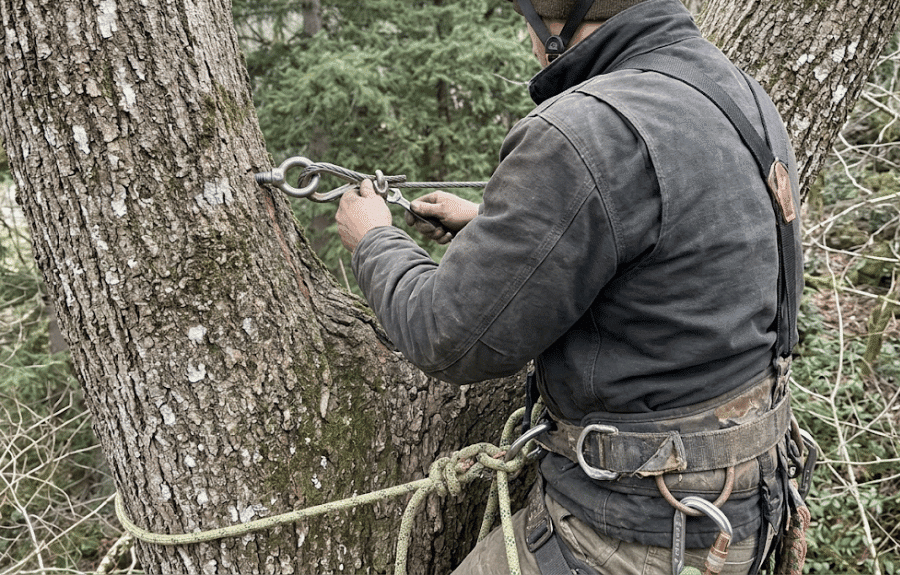
Installation happens high in the canopy, where a trained crew drills anchor points, sets the hardware, and tensions the cable between the stems.
What Does Tree Cabling Installation Look Like?
Installation happens in the upper canopy and is entirely handled by a trained crew, so here are three things to understand about it:
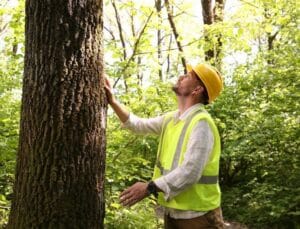
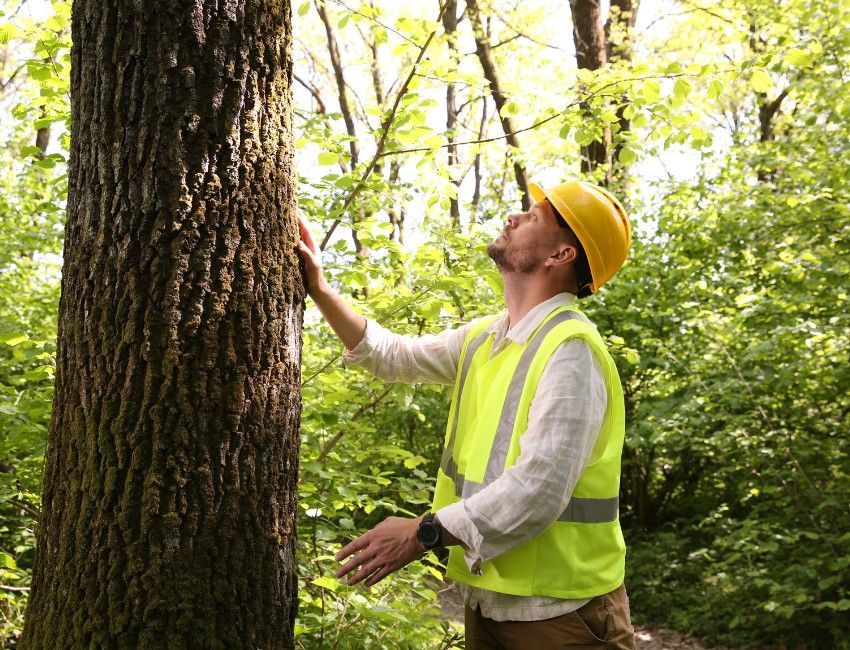
- Initial Assessment : An ISA Certified Arborist identifies the weak point during an assessment, and we offer cabling as an add-on when we find weak unions.
- A Specific Target : The support usually addresses one weak point, often two co-dominant stems that share a tight V-shaped union. Included bark in that union prevents connective tissue from forming between the stems.
- What the Crew Does : For a static system, the crew drills anchor points, installs hardware, and tensions a steel cable between them.
Does Tree Cabling Hurt the Tree?
It can, depending on the method and installer. But when done correctly, it’s a recognized practice that is meant to protect the tree. There are three things to weigh:
- Drilling : Static installs create wounds, while dynamic systems are usually attached without drilling.
- Limits : Cabling reduces risk but is not a one-time fix, since support systems do not provide primary support and need periodic inspection by an arborist.
- Installer Quality : Poor installation can cause harm, so look for an ISA Certified Arborist who follows the ANSI A300 standard for support systems.
How Long Does Tree Cabling Last?
Properly installed hardware is designed for a long service life, but we avoid promising a single number because the system only helps while it still fits a tree that keeps growing and changing. The following things help keep it working:
- Rechecks : Cables and fasteners are checked for wear and deterioration, and the right interval depends on the system and the tree, so your arborist sets the schedule. Dynamic systems in particular are typically checked more often than steel systems.
- Scheduling : Booking inspections is the tree owner’s responsibility, so plan on arranging the rechecks yourself.
- Adjustments : If the system no longer fits as the tree grows, the arborist adjusts it or reassesses the plan.
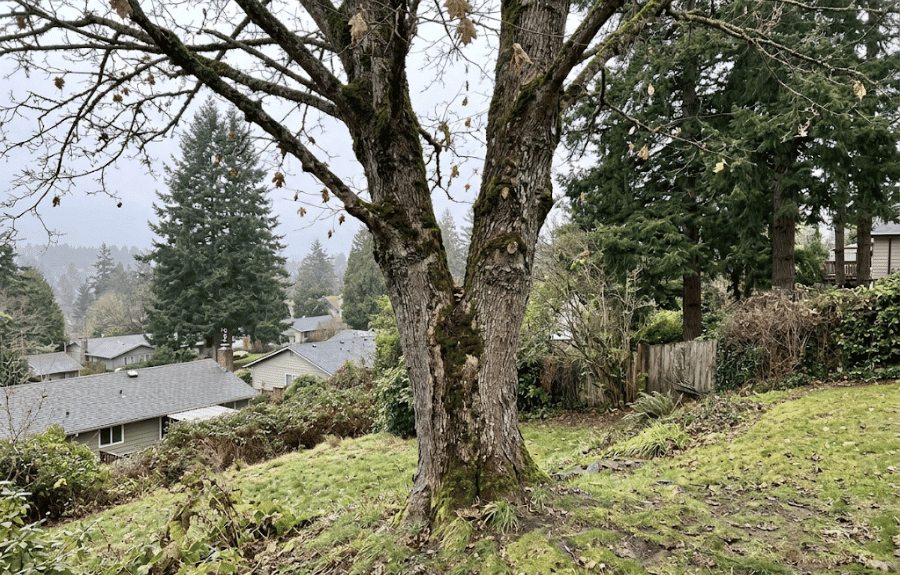
A mature tree with one specific weak point is often worth cabling, since it can reduce risk and buy time without losing the shade and character it provides.
Is Tree Cabling Worth It Compared With Removal?
Cabling is worth considering when a mature tree, like a bigleaf maple or Douglas-fir, has one specific weak point. It can reduce risk and buy time without losing the tree or the shade and character it provides on your property. It’s not the only option, so we weigh it against the following alternatives during the assessment:
- Early Pruning : Pruning while the tree is young helps it develop a single dominant leader, which can reduce the need for cabling later.
- Removing One Stem : Where it is feasible, removing one of two co-dominant stems can take the place of hardware when the weak union is a tight V.
- Removal : Cabling is not right for every tree, and removal is still the better call in some cases.
For such decisions, we lean on our tree preservation and tree pruning and trimming experience. Every tree and weak point is different, so we provide a quote after the assessment.
Frequently Asked Questions About Tree Cabling and Bracing
Are cabling and bracing installed together?
Often, yes. Rigid rods limit movement at the union, and arborists are advised to add a support cable to rod braces whenever possible.
Will tree cables be visible from the ground?
Usually not. Cables are typically installed high in the canopy, so most are difficult to spot from the ground. How visible a system is on your tree depends on its structure, so ask your arborist where it would sit.
Can a tree that’s already splitting still be supported?
Possibly. Rigid braces are commonly used on leaders that are already splitting, though rods can also be installed proactively. Your arborist inspects the wood around the union for decay first, because the rods need solid wood, and that finding can change the plan.
Does a cabled tree still need pruning?
It can. Pruning is sometimes done alongside cabling, and your arborist will tell you whether it belongs in your plan.
What should I ask my arborist before agreeing to tree cabling and bracing?
Four questions should do the trick:
- Which system do you recommend, and why?
- What exactly is being supported?
- How often will it be rechecked?
- What alternatives did you consider?
ArborPro Tree Experts Can Correctly Install Tree Cabling and Bracing
If an arborist has recommended cabling for one of your trees, or you’ve noticed cracks, splits, or a new lean, schedule an assessment with one of our ISA Certified Arborists. To request a quote in Southwest Portland, Tigard, or Milwaukie, visit our arborist services page.