What You Actually Pay for When You Hire a Certified and Licensed Tree Service
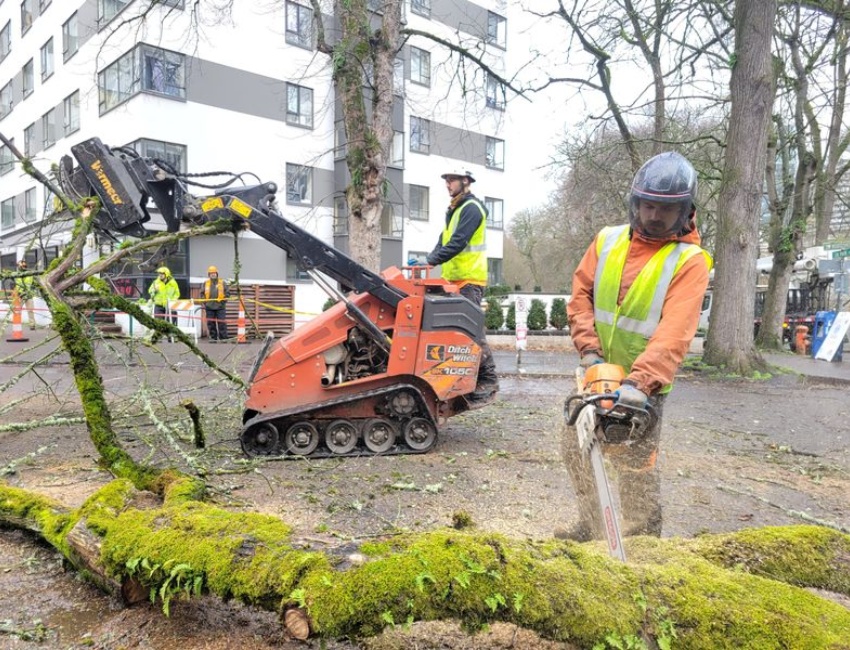
Three feet of snow. Fifty-mile-per-hour gusts. And within hours of the first major snowstorm of 2026, “cheap tree service” flyers flooded mailboxes and strangers with chainsaws were knocking on doors. They know you’re stressed and they‘re counting on you to say yes before you ask questions.
A tree service bid that’s significantly lower than the others isn’t a bargain — it’s a warning sign that something is missing: licensing, insurance, training, proper equipment, or more. Knowing how to find a licensed tree service in Portland — and spot the ones that aren’t — protects your property, your wallet, and your peace of mind.
Key Takeaways
- Licensed tree services cost more because they invest in equipment, insurance, training, and bonding — the things that protect your property.
- Oregon requires a Construction Contractors Board (CCB) license for any tree work over $500; verify at search.ccb.state.or.us before signing anything.
- Red flags like door-to-door solicitation, cash-only payment, and bids 40%+ below others signal unlicensed operators.
- If an uninsured worker is injured on your property, you may be held liable for their medical expenses.
- Improper pruning creates long-term damage — decay, weak regrowth, structural failure — that shows up years later.
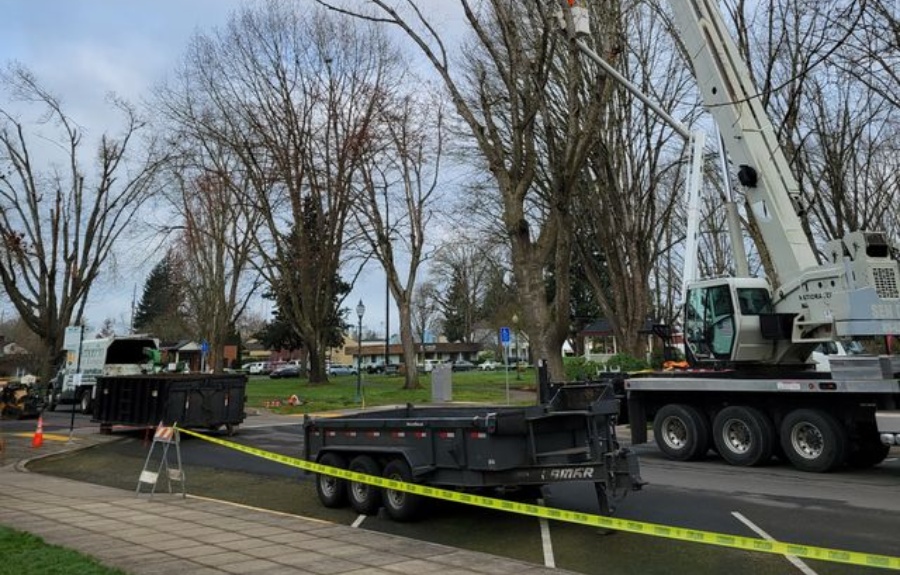
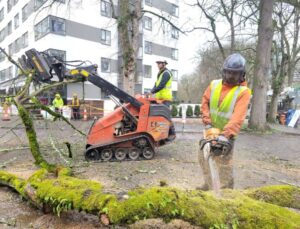
Crane-assisted tree removal requires specialized equipment, trained operators, and proper safety protocols — the kind of investment unlicensed operators skip.
Why Are Licensed Tree Services More Expensive?
Licensed tree services are more expensive than budget companies because they invest in trained professionals, specialized equipment, insurance, and state-required licensing — the things that protect both their crews and your property.
What’s the Difference Between a Certified Arborist and an Unlicensed Worker?
Certified Arborists have passed rigorous examinations in tree biology, pruning standards, disease identification, and risk assessment — and maintain their credentials through continuing education. Unlicensed workers learn informally, often through mistakes made on paying customers’ properties.
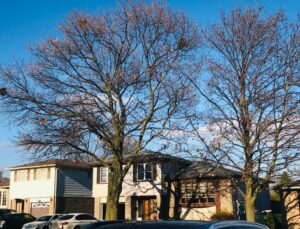
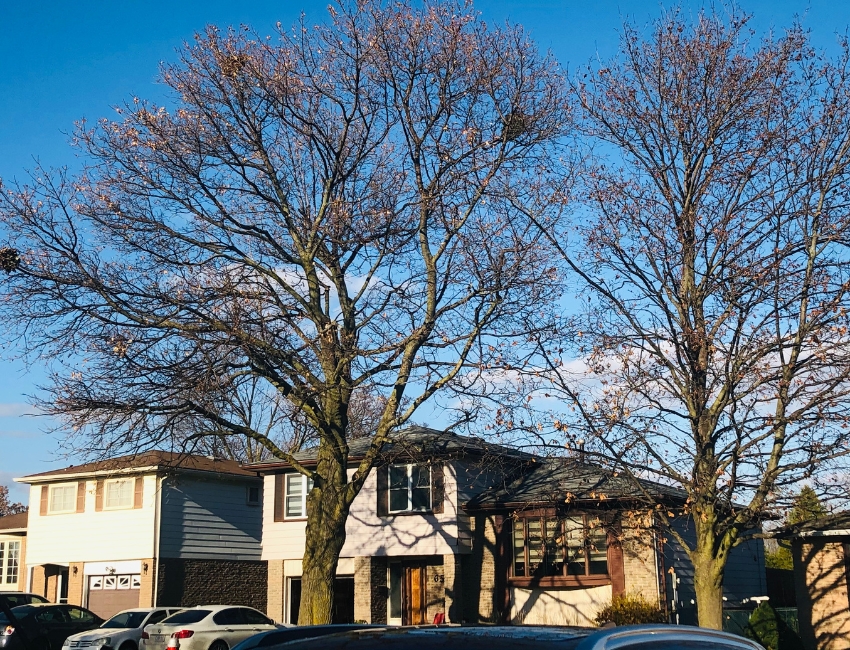
The difference shows up in results. Arborists understand how trees respond to cuts and know exactly where to make them, so wounds heal properly. Unlicensed workers often resort to “topping” — cutting main branches back to stubs — which destroys a tree’s structure and triggers weak, hazardous regrowth. And while many factors influence tree health, proper pruning plays a major role in how safely and successfully a tree matures.
What Equipment Do Professional Tree Services Use?
Professional tree services use specialized machinery that unlicensed operators typically can’t afford:
- Bucket trucks for safe aerial access
- Commercial-grade chippers rated for large-diameter wood
- Rigging gear for controlled lowering of heavy limbs
- Cranes for complex removals near structures
- Professional chainsaws designed for climbing work
This equipment requires ongoing maintenance, insurance coverage, and eventual replacement — costs that are built into every estimate.
What Insurance Should a Tree Service Carry?
Licensed contractors should carry several crucial insurance policies:
- General Liability: This coverage protects your property if something goes wrong.
- Workers’ Compensation: This ensures you’re not held liable for any potential crew injuries.
- Commercial Auto Insurance: This insures the company’s trucks and equipment.
Because tree work is classified as high-risk, insurance premiums are substantial — ongoing monthly costs that unlicensed operators simply skip.
PRO TIP: When a tree service quote seems too good to be true, it probably is. Usually, this means they’re cutting corners on training, insurance, or proper equipment — the things that protect you.
What Oregon Licensing Should You Verify Before Hiring?
Oregon’s Construction Contractors Board (CCB) license is legally required for any tree work exceeding $500 — and it provides specific protections for homeowners.
A valid CCB license means the contractor has:
- A surety bond protecting you if work isn’t completed properly
- Current liability insurance
- Workers’ compensation coverage (for companies with employees)
Oregon requires licensing and bonding to protect homeowners from unfinished work, property damage, and contractor fraud. The CCB license with surety bond gives you legal recourse if something goes wrong.
How Can I Verify if a Tree Service Is Properly Licensed and Insured in Oregon?
Start with the CCB license. Go to search.ccb.state.or.us and enter the business name or license number. Confirm all of the following before signing anything:
- License Status: Must show “Active” — expired or suspended doesn’t count.
- Insurance Dates: Coverage must be current, not lapsed.
- Bond Amount: Confirms bonding requirement is met.
- Complaint History: Any filed complaints against the contractor are visible.
But don’t stop there. “We’re insured” means nothing without documentation — policies lapse, and a certificate from 6 months ago proves nothing about today.
To verify insurance properly:
- Request current certificates of insurance
- Call the insurance company directly to confirm coverage is active
- Ask to be named as additional insured for your specific project
Legitimate companies handle this routinely. Hesitation or inability to produce documentation tells you everything you need to know.
DID YOU KNOW? ArborPro maintains active Oregon CCB licensure (#128102) and provides insurance verification on request.

Always request current certificates of insurance and verify coverage before signing — a verbal “we’re insured” isn’t proof of anything.
What Are the Warning Signs of an Unlicensed Tree Service?
Unlicensed operators often reveal themselves through behavior patterns before you even ask for credentials. End the conversation if you encounter any of these:
- Door-to-Door Solicitation After Storms: Legitimate companies are booked out; storm chasers target stressed homeowners.
- Cash-Only or Pay-Now Pressure: Professional companies invoice and accept multiple payment methods.
- No Company Name on Vehicles: Licensed contractors are proud to display their business identity.
- “We Can Start Today” Promises: Reputable companies are scheduled weeks out; instant availability during peak demand is suspicious.
- Unwilling to Provide CCB License Number: If they refuse, it’s likely because they don’t have one.
What Are Red Flags in a Tree Service Estimate?
Watch for these issues when reviewing quotes:
- Quote 40%+ Below Other Bids: Significant undercutting means significant corners cut.
- Nothing in Writing: No contract means no accountability and no recourse.
- Vague Scope of Work: Professional estimates specify exactly what’s included.
- No Mention of Cleanup or Debris Removal: Often excluded to lower the price.
What Can Cheap Tree Work Cost You in the Long Run?
Unlicensed tree work can create immediate financial liability and long-term property damage that far exceeds any upfront savings.
What Financial Risks Do You Face Without Proper Insurance?
Hiring an uninsured operator can leave you financially exposed in ways most homeowners don’t anticipate:
- Property damage becomes your problem when their “insurance” doesn’t exist or won’t pay claims
- Worker injuries may become your liability and if an uninsured worker is hurt on your property, you may be responsible for their medical costs
- No bond means no protection if they take your deposit and disappear mid-job
- Permit violations fall on you; municipalities may fine the property owner for unpermitted work, regardless of who was supposed to handle permits
How Does Improper Tree Work Cause Long-Term Damage?
The worst part of bad tree work is that problems often don’t show up immediately; they emerge two to five years later:
- Bad Cuts Don’t Seal Properly: Fungi, pests, and other diseases can enter through improper wounds and spread internally.
- Topped Trees Develop Hazardous Regrowth: Weak, poorly attached branches are more likely to fail in future storms.
- Root Damage Affects Nearby Trees: Careless equipment use during removal can harm healthy trees on your property.
- Disease Spreads Between Trees: Unsanitized tools can transfer pathogens from cut to cut.
When Should You Call a Professional Arborist?
You should call a professional arborist whenever the work involves risk to people, property, or the tree’s long-term health.
These situations, for instance, always require professional expertise:
- Trees near structures, power lines, or property boundaries
- Trees over 20 feet tall or with multiple trunks
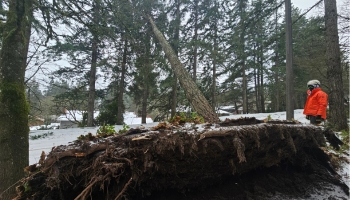
- Storm-damaged trees with hanging branches or compromised structure
- Work requiring permits (most Portland Metro cities have diameter thresholds)
- Any situation where you’re uncertain about the best approach
A consultation costs far less than correcting improper work. The factors that make a licensed tree service cost more — equipment, training, insurance, licensing — are exactly what protect your property and eliminate your liability.
Frequently Asked Questions About Licensed Tree Service in Portland
Can I be fined for hiring an unlicensed contractor in Oregon?
Oregon holds contractors responsible for licensing violations, but homeowners face complications too. If you’re selling your property, for example, unpermitted work may require corrections before you can list your home. Plus, some municipalities fine property owners for tree work done without required permits.
What’s the difference between a CCB license and ISA certification?
A CCB license is Oregon’s required business license proving the contractor meets state bonding and insurance requirements. ISA certification is a professional credential demonstrating individual arborist expertise. The best tree services have both.
How far in advance should I book a reputable tree service?
Quality companies are typically booked 2-6 weeks out, depending on season. Immediate availability during peak periods is often a red flag.
What recourse do I have if a licensed contractor damages my property?
Document everything with photos, file a claim with their insurer, and contact the contractor in writing. If unresponsive, file a complaint with Oregon CCB and potentially claim against their surety bond.
How should I compare estimates fairly?
Get at least three estimates and compare scope, inclusions (debris removal, stump grinding, permits, etc.), and payment terms. Ask each company to explain significant price differences.
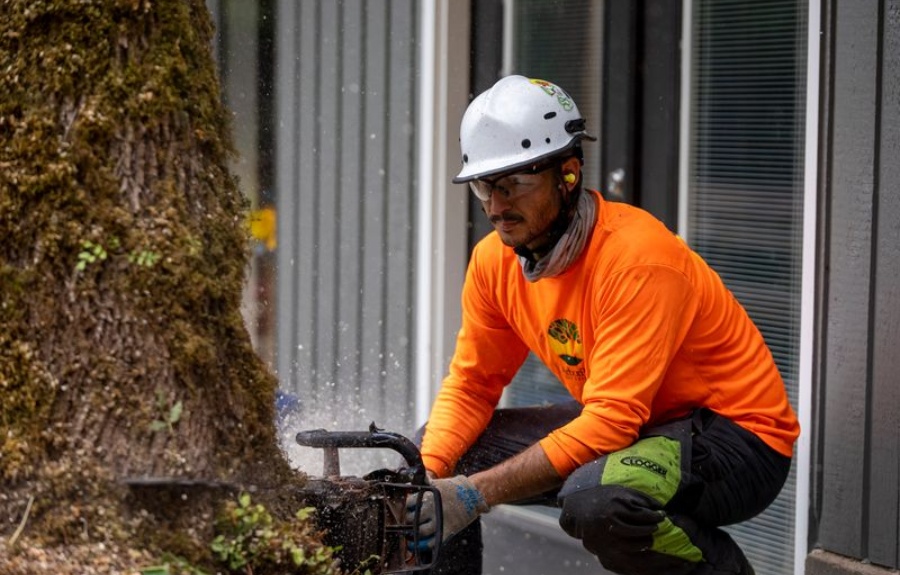
Proper PPE and trained technique protect both the worker and your property — signs of a licensed tree service you can trust.
Avoid the Costs of Cheap Tree Work – Call the Licensed Experts at ArborPro
The things that make a licensed tree service cost more — equipment, insurance, training, and expertise — are exactly what protect your property, your wallet, and your peace of mind.
ArborPro Tree Experts is a licensed tree service in Portland with full credentials (CCB #128102) and ISA Certified Arborists on staff. Based in West Linn and serving the Greater Portland Metro area for over 30 years, our team delivers the expertise and accountability your property deserves.
Request your estimate online or by calling 503-473-8733 today.